Equip Your Business: Bagley Risk Management Insights
Safeguard Your Livestock With Livestock Risk Protection (Lrp) Insurance Coverage
Animals manufacturers deal with a myriad of obstacles, from market volatility to uncertain climate condition. In such a vibrant setting, guarding your livestock ends up being vital. Animals Threat Security (LRP) insurance policy provides a critical tool for producers to safeguard their investment and mitigate possible economic dangers. By understanding the ins and outs of LRP insurance, producers can make enlightened choices that safeguard their incomes.

Recognizing Animals Threat Defense (LRP) Insurance Policy
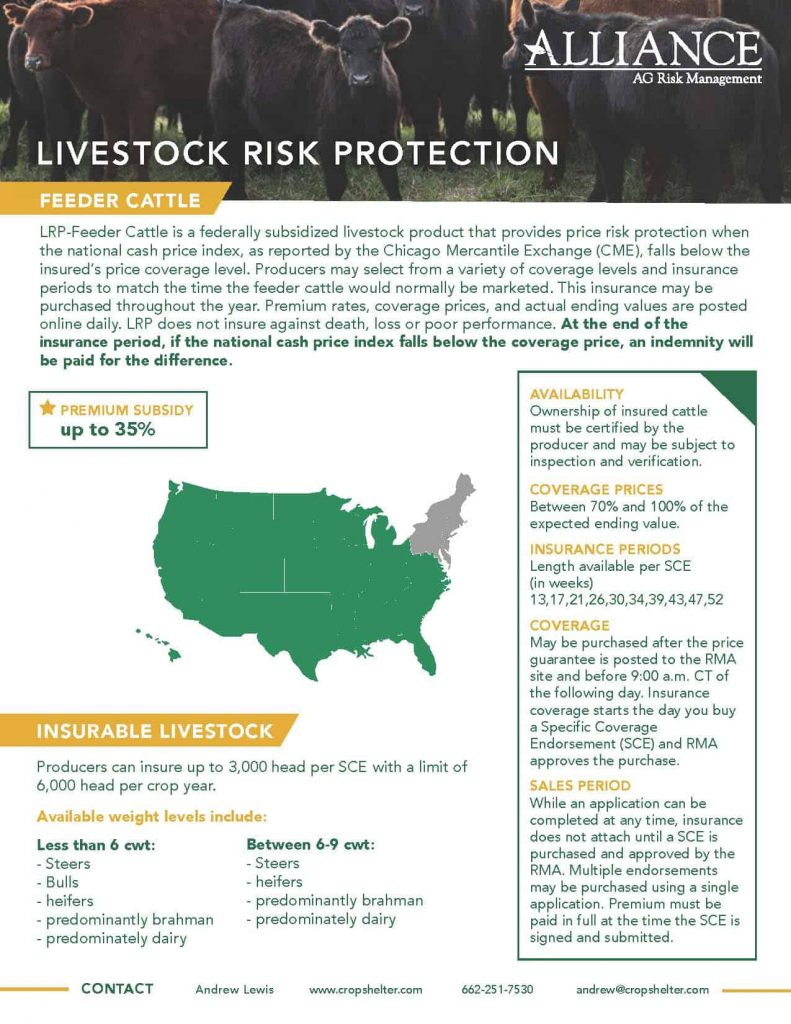
Livestock Risk Security (LRP) Insurance policy offers vital coverage for animals producers against potential economic losses because of market price changes. This kind of insurance coverage allows manufacturers to alleviate the danger associated with unpredictable market conditions, making certain a degree of financial safety and security for their operations. By utilizing LRP Insurance policy, manufacturers can secure a minimal cost for their animals, securing against a decline in market value that can negatively affect their profits.
LRP Insurance policy operates by providing coverage for the distinction in between the insured price and the actual market cost at the end of the coverage duration. Producers can choose coverage levels and insurance coverage periods that straighten with their specific needs and take the chance of tolerance. This adaptability permits manufacturers to tailor their insurance coverage to ideal protect their monetary interests, offering peace of mind in a naturally volatile market.
Comprehending the ins and outs of LRP Insurance is critical for livestock manufacturers looking to protect their procedures against market unpredictabilities. By leveraging this insurance tool properly, manufacturers can navigate market variations with confidence, ensuring the lasting viability of their animals organizations.
Benefits of LRP Insurance for Livestock Producers
Enhancing economic protection and security, Livestock Risk Defense (LRP) Insurance coverage supplies important safeguards against market rate changes for manufacturers in the livestock industry. Among the vital advantages of LRP Insurance coverage is that it supplies producers with a tool to manage the danger connected with unforeseeable market rates. By allowing producers to set an ensured cost flooring for their livestock, LRP Insurance coverage helps safeguard against potential losses if market value fall below a certain degree.
Moreover, LRP Insurance coverage enables producers to make even more educated decisions concerning their operations. With the assurance of a minimum rate for their livestock, manufacturers can prepare ahead with greater confidence, knowing that they have a safety and security web in position. This can result in enhanced security in profits and reduced financial anxiety throughout times of market volatility.
How LRP Insurance Policy Mitigates Financial Risks
By giving manufacturers with a dependable safeguard against market cost fluctuations, Animals Danger Protection (LRP) Insurance properly safeguards their financial security and minimizes possible threats. One essential method LRP insurance helps mitigate economic threats is by using defense against unanticipated declines in livestock rates. Manufacturers can purchase LRP plans for particular weight varieties of livestock, permitting them to hedge against market downturns that can otherwise lead to significant economic losses.
In addition, LRP insurance coverage supplies manufacturers with assurance, understanding that they have a predetermined level of cost protection. This certainty permits manufacturers to make educated choices concerning their operations without being unduly influenced by unpredictable market variations. In addition, by minimizing the monetary uncertainty related to price volatility, LRP insurance policy makes it possible for manufacturers to far better prepare for the future, allocate sources efficiently, and inevitably enhance their total economic strength.
Actions to Secure LRP Insurance Coverage Coverage
Protecting LRP insurance protection involves a collection of uncomplicated actions that can supply producers with useful security against market unpredictabilities. The first step in acquiring LRP insurance coverage is to speak to a licensed plant insurance policy agent.
Once the application is sent, producers will require to pay a premium based upon the protection degree and variety of head guaranteed. It is important to assess and comprehend the plan extensively prior to making why not try these out any settlements to guarantee it meets find more info the certain demands of the procedure. Bagley Risk Management. After the premium is paid, producers will obtain a certification of insurance coverage, recording their coverage
Throughout the protection duration, manufacturers need to maintain in-depth records of their livestock stock and market costs. In case of a rate drop, producers can sue with their insurance representative to receive settlement for the difference between the insured rate and the market price. By adhering to these actions, producers can secure their livestock operation against monetary losses triggered by market fluctuations.
Making The Most Of Value From LRP Insurance Policy
To draw out the complete take advantage of Animals Threat Protection Insurance, producers must purposefully make use of the protection alternatives readily available to them. Making best use of the value from LRP insurance policy involves a comprehensive understanding of the policy features and making notified decisions. One key technique is to carefully assess the coverage degrees and duration that ideal align with the certain needs and threats of the livestock operation. Manufacturers should also routinely evaluate and change their coverage as market problems and threat elements progress.
Additionally, manufacturers can boost the value of LRP insurance coverage by leveraging complementary threat monitoring devices such as choices and futures agreements. By branching out danger monitoring techniques, manufacturers can alleviate potential losses a lot more successfully. It is vital to stay educated about market fads, federal government programs, and sector growths that might impact animals rates and run the risk of monitoring approaches.
Ultimately, maximizing the worth from LRP insurance coverage requires aggressive preparation, ongoing tracking, and versatility to changing scenarios. By taking a calculated strategy to run the risk of management, manufacturers can safeguard their animals procedures and improve their total monetary stability.
Final Thought
Finally, Animals Risk Security (LRP) Insurance policy uses useful advantages to livestock manufacturers by reducing monetary risks related to fluctuations in market value. Bagley Risk Management. By securing LRP insurance policy protection, manufacturers can safeguard their animals financial investments and potentially raise their success. Understanding the benefits and steps to make the most of worth from LRP insurance policy is crucial for animals producers to effectively manage threats and safeguard their companies
Livestock Threat Protection (LRP) Insurance policy provides essential protection for published here animals manufacturers versus possible monetary losses due to market rate variations.Enhancing monetary protection and stability, Livestock Threat Security (LRP) Insurance offers important safeguards versus market cost variations for manufacturers in the livestock sector.By offering manufacturers with a trusted safety and security internet versus market price fluctuations, Animals Risk Security (LRP) Insurance policy properly safeguards their financial security and reduces prospective dangers. The initial action in obtaining LRP insurance is to call an accredited plant insurance representative.In final thought, Livestock Threat Defense (LRP) Insurance policy supplies useful benefits to livestock manufacturers by minimizing monetary threats connected with fluctuations in market rates.